


Behind the Seams
I love actors, and I love theater, so I feel like my job is to help them feel their best (and) look their best. When they love how they look, and they like how they feel in their costume.
– Lisa Zinni
South Florida costume designers reveal the hidden artistry that brings characters to life
BY KRISTIN VOIT
kristin.voit@floridaweekly.com
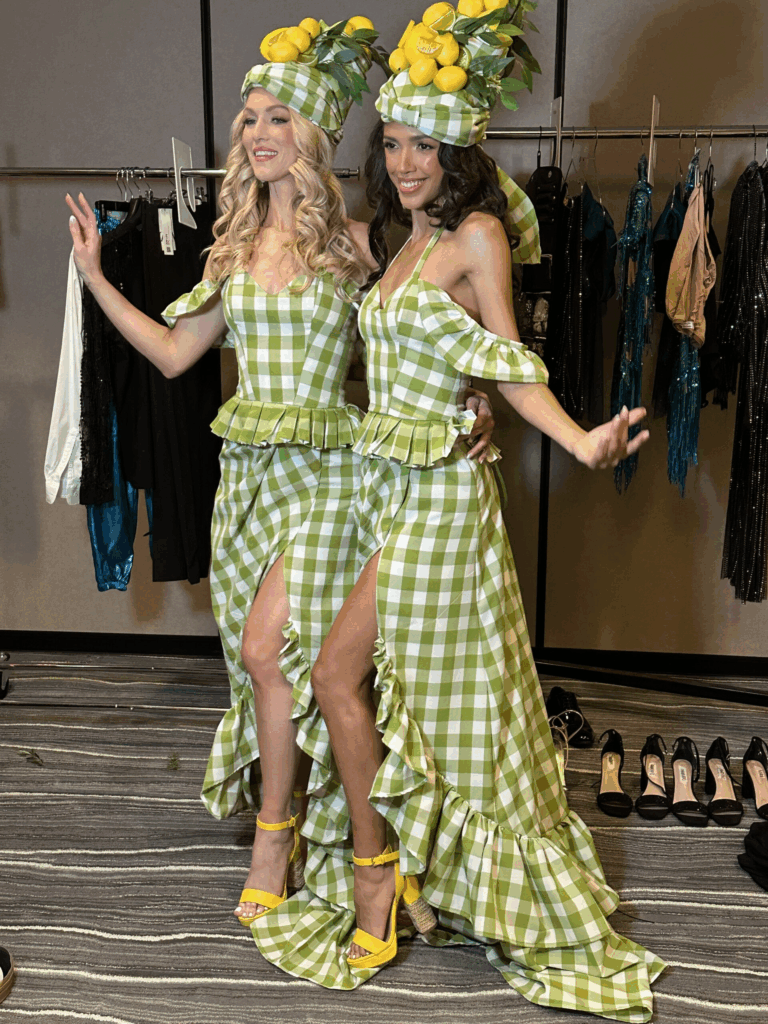
Throughout South Florida, costume designers employ skill and psychology to research and engineer clothes that enhance a story as it unfolds on stage. What a person wears communicates a lot about them — a well-tailored suit broadcasts confidence, a faded shirt betrays hard times and an extravagant gown radiates high social status. Costume designers envision and craft each silhouette and button to help shape audience perceptions and create the imagined world of each production.
Mara Lattanzi: Starting with the script
“I always start with the script,” says Miami-based costume designer and art director Mara Lattanzi. “It gives me a time frame, and it gives me a feel for the character.”
Lattanzi, whose career began designing elaborate custom costumes in New Orleans’ French Quarter, has amassed more than three decades of sewing experience and understands the vulnerability of dressing each actor for the stage.

“I have thirty-six years of sewing experience. I can do just about anything. I can make all kinds of wild changes and alterations to achieve the look and the fit. When putting an actor in a costume that needs a lot of expansion and serious overhaul to make the fit right, you can see the discomfort on their face immediately. I understand how hurtful it can be when nothing fits. Handling an actor’s feelings and emotions can be the most challenging part of a fitting. The gasp reaction of, ‘I look so good,’ or ‘I feel so pretty,’ is the best. I’ve seen it a million times, and it still makes me happy.”
Additionally, redesigning or altering garments after rehearsals reveal unexpected challenges, requires creative problem-solving and skilled backstage help.
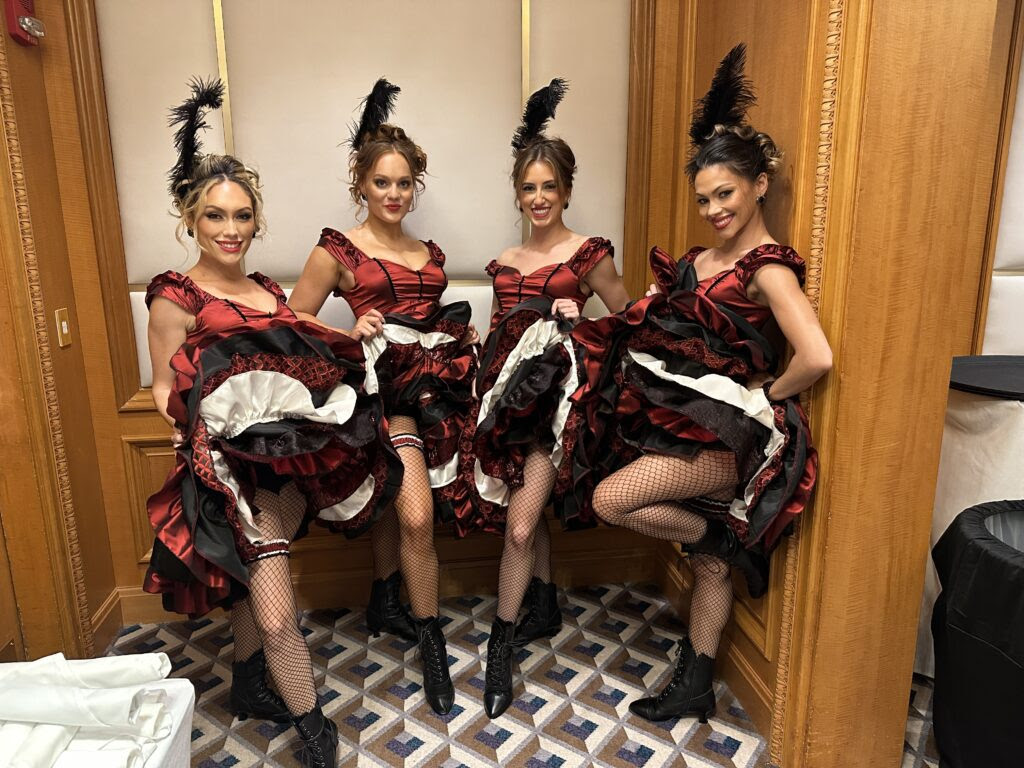
“You can have all the snaps and zippers, but having a dresser who knows exactly what they’re doing makes all the difference,” she explains. “I was dressing and stitching for an opera once, and one of the dressers just didn’t understand how the garments were supposed to go together. The quick changes for those dancers were dependent on having the dresser be able to get them changed in less than 90 seconds. Eventually, we had to switch our dresser assignments around so that someone more experienced could do the quick changes.”
Brian O’Keefe: What’s in their closet

Brian O’Keefe, costume shop manager and resident costume designer at Palm Beach Dramaworks, originally studied chemistry in college but changed his major to pursue a career in costume design. – PALM BEACH DRAMAWORKS / COURTESY PHOTO
Brian O’Keefe, costume shop manager and resident costume designer at Palm Beach Dramaworks, begins by exploring and questioning each character’s inner motivations. “Who is this person?” he considers. “What’s in their closet? Why did they choose to wear this today?”
A pattern maker and designer with decades of experience in New York, Florida and throughout the country, O’Keefe originally studied chemistry and planned to become a dentist, but his career trajectory changed after he took a costume-construction class at the University of North Carolina at Chapel Hill. “The very first day they taught me how a sewing machine worked,” he recalls. “It made perfect sense to me.” Understanding the mechanics of the process shapes O’Keefe’s artistic decisions. “What needs to be constructed? What can be bought? What can be pulled?” he considers before beginning each project.
After studying a script, O’Keefe researches the time frame and setting and meets with the director to discuss the scenic design and color choices. Then he begins gathering fabrics and accessories and sketching or constructing garments.
“I think some of the most important things for people to understand about costume design is that what you’re looking at is providing you information, whether on a conscious level or not,” he says. “If you watch a play with all of that in mind, you’ll discover you’re getting a lot more information than you realize.”
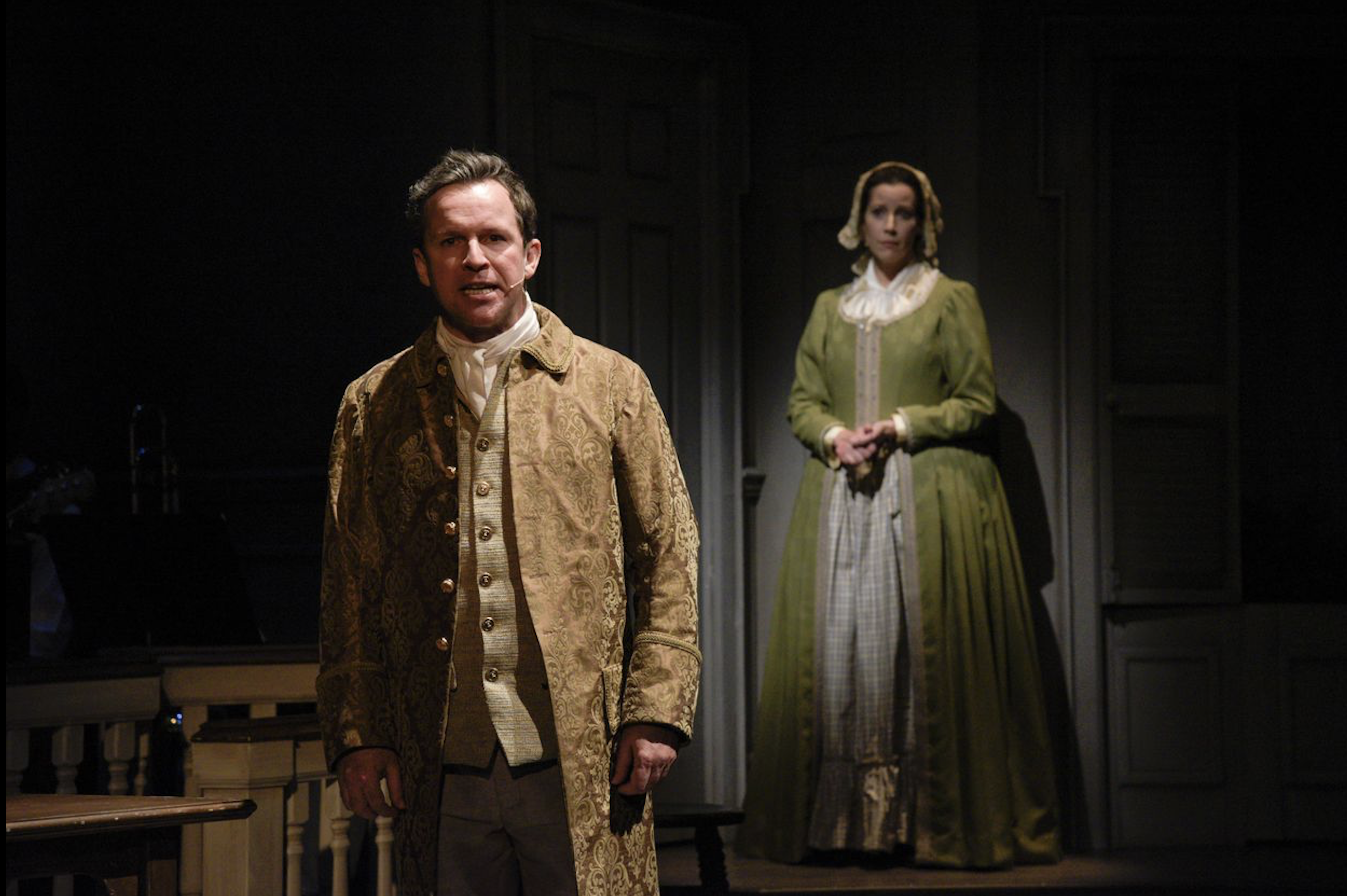
A production of “1776” at Palm Beach Dramaworks showcases a costume designed by Brian O’Keefe that allowed one actress to switch roles quickly in full view of the audience. -PALM BEACH DRAMAWORKS / COURTESY PHOTO

Because many actors are hired months in advance and arrive from outside South Florida, he often begins designing before meeting them in person, considering details such as their body proportions, comfort levels, allergies and even whether they dislike showing certain parts of their bodies.
During a production of “1776” at Palm Beach Dramaworks, O’Keefe recalls designing a costume for an actress portraying both John Hancock and Abigail Adams, who had to change costumes in full view of the audience. O’Keefe designed a costume that allowed for an eight-second onstage transformation using magnets, a zipper and layers. “It was a big challenge,” he says, “but it was a lot of fun to figure out.”


Lisa Zinni: Dream big

Lisa Zinni. -COURTESY PHOTO
“It’s visual storytelling,” explains Lisa Zinni, costume designer for Gulfshore Playhouse’s upcoming winter adaptation of “A Christmas Carol.” Zinni, who lives in New York City, has spent over 20 years designing for Broadway and regional shows throughout the country.
“Even for people who love ‘A Christmas Carol’ and think they know it — it’s going to be with fresh eyes on a classic story. It still has all the tradition associated with Christmas, but it’s also told in a new way,” she explains. “I feel like theater is so collaborative, and everyone has all these ideas. When someone comes up with a crazy idea, instead of being like, ‘No, we can’t do that,’ you want to say, ‘Maybe we can’t do it that way, but what if we try this?’ You want to live in the land of anything is possible.”
Zinni considers the realities of a production’s budget, although she allows her initial inspiration to emerge free of practical parameters. Later, she applies her knowledge and skill to find creative ways to bring her vision to life within each production’s monetary constraints.
“I always think (about) how resourceful I can be, and I like to design initially as if I’m not limited by what the budget is for what I’m going to put on the paper. I dream big,” she says. “After you’ve created the image and have the vision, then you can figure out, ‘Is this fabric silk fabric that’s $100 a yard, or is it a synthetic version that’s a much cheaper alternative?’”
Zinni finds it hard to identify a favorite costume or production project. “You invest energy and time and creative energy into the thing and give it your all,” she says. “For me personally, it’s about the connection. I love actors, and I love theater, so I feel like my job is to help them feel their best (and) look their best. When they love how they look, and they like how they feel in their costume, and it’s supporting everything they’re doing, it makes the show better.”
In a flurry of activity that audiences rarely see, costume shops stitch garments, sort jewelry, fit wigs and cycle actors through a series of costume fittings and alterations. Once a show approaches opening night, wardrobe supervisors and dressers organize racks of clothes, prepare for quick costume changes and address last-minute repairs and adjustments.
If a character feels authentic, theatergoers can completely buy into the magic of the stage and leave talking about unforgettable performances — perhaps never realizing the extent to which those performances were influenced by a needle and thread and a costume designer who carefully crafted a story through each character’s wardrobe.
Make a Donation Today
You play a vital role. By supporting Gulfshore Playhouse, you are transforming a region and transforming lives.